All lessons Module 5: Patterns Lesson 11
The Stomach: all patterns
Pain in the epigastrium: empty or full, cold or hot, Qi, food or Blood, and which finding decides first?
After this lesson you know the Stomach patterns of ch. 38 with signs, tongue, pulse, cause and principle; you separate deficiency from excess by what pressure and food do to the pain, Cold from Heat by thirst and coating, and you recognise the neighbours from the Spleen and Liver. Stomach-Heat and Retention of Food from module 1, lesson 8, and Damp-Heat (pattern 9) come back as they were.
Know by heart
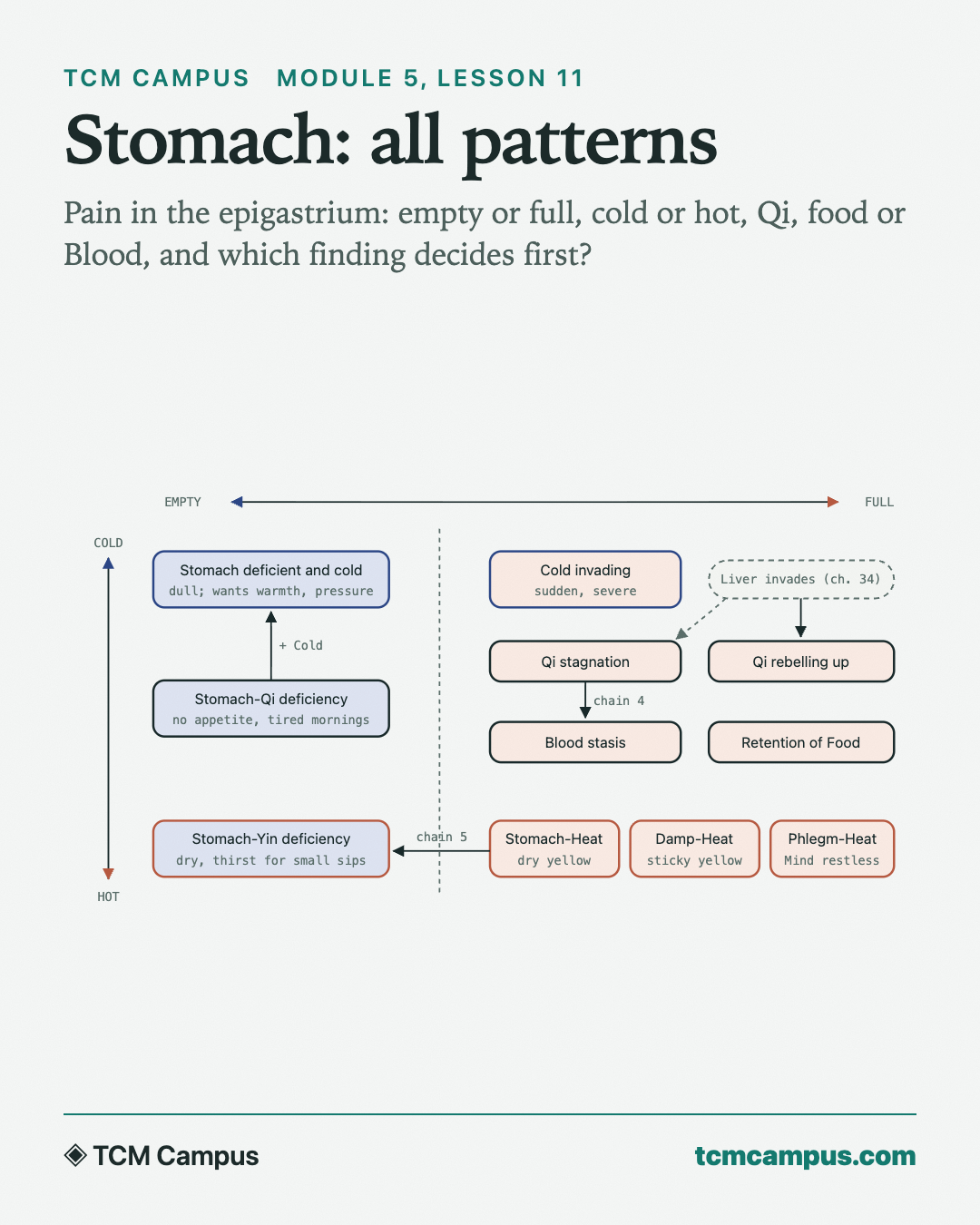
- Three deficiencies. Qi deficiency: discomfort, no appetite, tired in the morning; pale; empty at the right Guan; tonify Stomach-Qi. Deficient and cold: dull pain, better after eating, with pressure and warmth; pale, swollen; deep, weak; warm and tonify. Yin deficiency: dry mouth, thirst with small sips; bare centre; floating-empty or thin; nourish Stomach-Yin. mnemonic: weak, cold, dry.
- Pressure and food decide. Better after eating and with pressure is deficiency; worse with pressure or after eating is excess. mnemonic: what is empty wants to be filled.
- Cold: full or empty. Cold invading: sudden, severe, worse with pressure; thick white coating; deep, slow, tight; expel Cold, warm the Stomach. Deficient and cold: chronic, dull, better with pressure.
- Heat three ways. Stomach-Heat: burning, hunger, gums, bad breath; red, dry yellow; full, rapid; clear Heat. Damp-Heat (9): heaviness, thirst without desire to drink; sticky yellow; slippery-rapid. Phlegm-Heat: as Stomach-Heat plus restlessness and insomnia; sticky yellow; slippery, rapid, overflowing. mnemonic: dry burns, Damp sticks, Phlegm stirs the Mind.
- Qi, food, Blood. Qi rebelling upwards: nausea, belching, vomiting, hiccups; make it descend. Retention of Food: fullness, sour regurgitation, bad breath, better after vomiting; thick coating; slippery; Bao He Wan. Blood stasis: stabbing, worse at night, vomiting dark blood; purple; choppy: emergency care first.
- Two neighbours. Liver invading the Stomach (ch. 34 p. 559): pressure and sourness that follow the mood; pulse wiry. Spleen: the Stomach descends and likes moisture, the Spleen ascends and likes dryness.
- Red flags. Vomiting blood or coffee grounds, black stools, difficulty swallowing, weight loss, pain on exertion: see a doctor first.
The rest of this lesson is reference.
Three practice questions from this lesson
Case. Woman, 52: for years a dull pain in the epigastrium that gets better after eating and with a hot-water bottle on it; she wants everything warm, sometimes vomits clear fluid, cold hands, tired. Tongue pale, swollen, moist; pulse deep and weak.
- Stomach-Yin deficiency
- Stomach deficient and cold
- Cold invading the Stomach
Answer: Stomach deficient and cold. Chronic, dull, better with food, pressure and warmth: a cold, empty pan. Invading Cold is sudden, severe and worse with pressure.
Case. Man, 25, after ice-cold drinks on a cold evening: sudden, severe pain in the epigastrium, worse when pressed, vomits clear fluid, wants a hot-water bottle. Tongue with a thick white coating; pulse deep, slow, tight. The abdomen is soft.
- Stomach deficient and cold
- Cold invading the Stomach
- Stasis of Blood in the Stomach
Answer: Cold invading the Stomach. Sudden, severe, worse with pressure, a tight slow pulse: excess from Cold. Stomach deficient and cold is chronic and dull and better with pressure; Stasis of Blood gives a fixed stabbing pain, worse at night, with a purple tongue. A hard, rigid abdomen would first mean a perforation or pancreatitis: emergency services.
Which question separates deficiency from excess in the epigastrium fastest?
- Since when have you had the pain?
- Does the pain feel burning or rather cold?
- What do pressure and food do to the pain?
Answer: What do pressure and food do to the pain?. Better after eating and with pressure is deficiency, worse is excess. Duration, burning and cold help afterwards, but do not decide.
The rest of this lesson
In the course you get the step-by-step explanation, 15 case-based practice questions, 19 spaced-repetition flashcards, the pitfalls and the bridge to physiology with evidence grades. This lesson belongs to module 5: Patterns.